
Does human trafficking happen in Colorado?
Human trafficking is common in every state and territory in the United States, including Colorado. Although accurate quantitative data about trafficking is always difficult to obtain due to the hidden and elusive nature of the crime, the Laboratory to Combat Human Trafficking in Colorado has published extensive qualitative information profiling how exploitation looks in each region of the state. The Human Trafficking Hotline received 465 Colorado reports of trafficking in 2024 alone — a number that represents a tiny fraction of the whole, since it’s only the cases of those who felt able to call a hotline.
Colorado has made strides towards protecting those who are being trafficked, but there is a long way to go. The most recent report card from Shared Hope graded Colorado with a C. This is an improvement over previous years, but still identifies victim protections as the biggest gap.
Beyond what we know from formal analysis, we can be absolutely certain that trafficking exists in Colorado through the stories of those who have lived it. One of those people is Susan. She is a survivor of familial sex trafficking in Colorado, and this is her story.
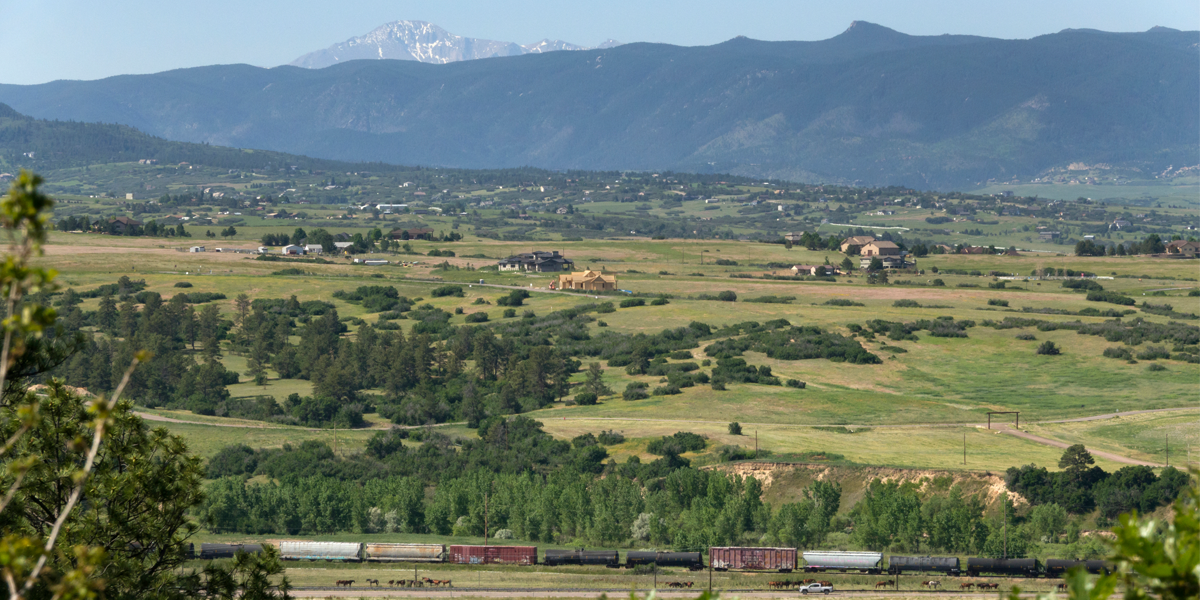
Growing up in Douglas County
Content note: this story contains sexual abuse, assault, suicidal ideation, and child sex trafficking.
For the first nine years of Susan’s life, her family was the model suburban white-collar family. She lived with her parents and her older sister. Her dad worked a job that kept the family financially well-supplied. They were part of a ski club, a golf course, and a country club, giving young Susan plenty of social outlets.
Everything changed when her parents got divorced.
“Before long, we were living in a small town in southern Douglas County. I was living with my mom, my sister, and my grandmother,” Susan recalls. “My mother and grandmother were severe alcoholics.”
Susan watched her family members escape into substances. Her sister was always out of the house, seeking shelter with friends and alcohol. As a child, Susan had no escape of her own. As her mother’s alcoholism and financial instability spiraled, the situation quickly worsened.
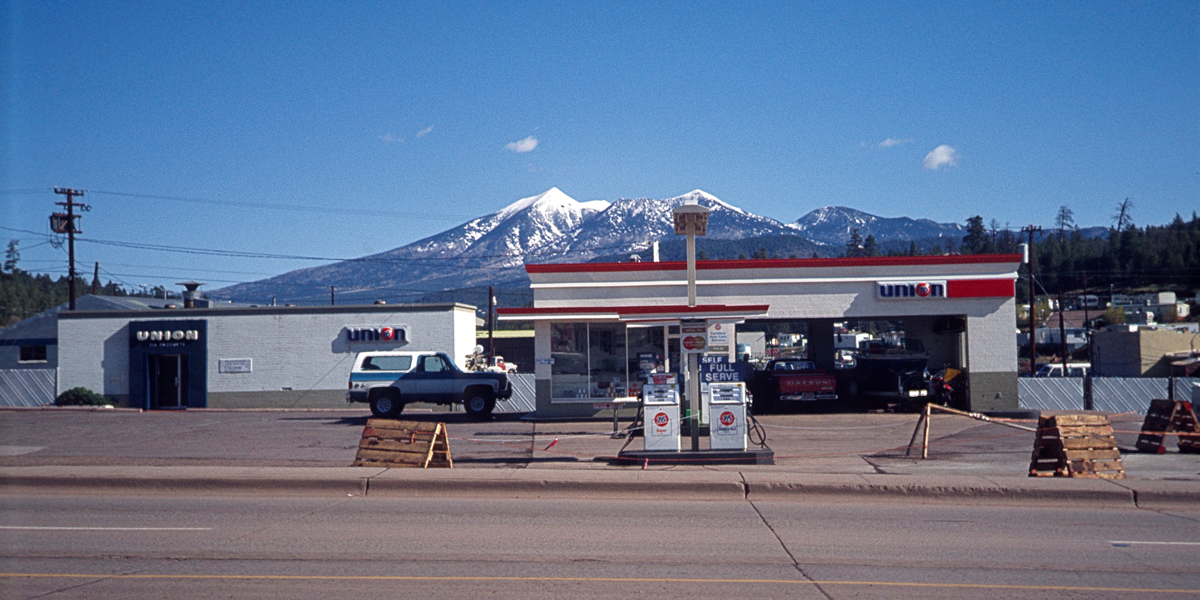
The lonely little Colorado town where Susan and her family lived held one gas station. When Susan was still just nine years old, her mother secretly made an arrangement with a man who worked there. Then Susan’s mom dressed her up and brought her to a young man at the gas station, a man Susan estimates to have been 18 or 19 years old.
“Be nice to the man,” Susan’s mom said, “and he’ll be nice to you.”
That was the first time that Susan was sold for sex.
The gas station’s owner continued to arrange meetings for Susan, collaborating with her mom. In return for Susan’s body, her mother received the products she desperately craved.
Susan says, “I was sold for a tank of gas, a six-pack of beer, and some cigarettes for over a year.”
Previously an outgoing and curious child, Susan found herself turning inward as a coping mechanism.
“When we moved to that small town, we were out in the middle of 26 acres. There was nothing. There was the TV and you, and that was it. That was all I had,” Susan frankly admits. “I became very withdrawn, a lot quieter, and not the outgoing person that I used to be. That was what got some of the teachers interested that there might be something going on. But I could never tell them. When your mom says, “Don’t tell anybody,” you don’t tell anybody.”
After a year of exploitation, Susan’s mom had a mental breakdown. She sent Susan to live with her father and her stepfamily. But Susan had just traded one horror for another: she had a stepbrother who molested her. She didn’t dare mention this to her new teachers either, especially as her father’s health began rapidly declining.
“I had a couple of teachers who, when my dad was dying, actually offered their homes to me so I wouldn’t be out on the street. So I think my teachers were aware that something was up, but they couldn’t figure out what it was,” Susan says.
At the same time, not every teacher was a good influence. Susan and her boyfriend were going to parties where they’d be drinking right alongside some of their teachers and the school counselor. Her boyfriend was seven years older than she was, and most of the adults around them assumed that this meant he could take care of Susan.
An aftermath of chaos
At only 14 years old, Susan moved in with her boyfriend’s family. Within four years, they were married. With all her trauma still compartmentalized and repressed, this began a new era of coping.
“I looked at my situation, and I had nowhere else to go. This was my saving grace. I just went with it,” Susan says of her first marriage. “You go into survival mode, and I think you get stuck there, and then you find yourself coping.”
The marriage was often dysfunctional due to unresolved trauma, but the couple started a family. Just when Susan might have found a little normalcy, she was raped at gunpoint in Las Vegas.
“It was one sexual tragedy after another after another,” Susan shares. “There were three major sexual events that occurred in my life: the trafficking, the molestation, and the trauma that the rapist caused. I have spent over 30 years learning to cope with all of that trauma.”
Initially, coping looked like diving deep into alcohol. Like her mother and sister before her, Susan had finally found an escape.
“I was a good alcoholic. If it makes the pain go away, you get enthralled in it,” the survivor said.
Deep down, Susan was driven by the desire to help others in a way she’d never been helped. She began a career with the fire service, and she later became an expert EMT — triaging the worst moments of others’ lives even as her own heart remained compartmentalized and fractured. Work became another all-consuming way to avoid her own past.
The survivor went through four marriages, each one burdened with the aftermath of her trauma. Her alcoholism, her overwork, suicide attempts, and her unstable relationships were all driven by a belief that had taken root in her spirit at nine years old: that her worth could be reduced to a tank of gas, a six-pack of beer, and some cigarettes.
Redeeming the trauma
For Susan, redemption began later in life with her fifth marriage and hard-fought sobriety.
“A lot of my work has been done in the last seven years, dealing with childhood trauma,” Susan shares. “I was a blackout drinker for decades. That was part of the coping mechanism of dealing with childhood trauma, being sold, being molested, being violated, and not knowing how to express it.”
When Susan started to name what had happened to her, the process began to lend clarity and the impetus for healing.
She says, “As survivors, we’re very good at compartmentalizing. It’s easier to stick it in a box on the shelf and leave it there than to work with what’s in the box. For years, that’s where my trauma has sat — until recently. Coming to the realization that what happened has a name, pulling that box off the shelf, has helped me see why I was the narcissistic alcoholic that I was. To see why I made a lot of relationship decisions that I did over the years: jumping from one situation to the next was a survival mechanism.”
Today, Susan has been married to a supportive husband for 15 years. She has a stable job and stable recovery that she credits in large part to the steadiness of her Alcoholics Anonymous sponsor and working that program.
“I have stability, I have security, I have food on my table, a roof over my head. I have all of those things that I didn’t have before,” she explains. “When you’re in survival mode, you make rash decisions, and then there are consequences to those decisions. I’ve been coming to the realization that I went through these things for a reason. I’m not supposed to hide. I’m not supposed to be ashamed. It’s OK to talk about it. That’s something new; for decades, it’s been ‘You don’t talk about it.’”
Part of the decision to talk about it came through Susan attending an event that The Exodus Road held in Colorado Springs, where she heard another survivor tell her story. The moment catalyzed Susan’s own dawning realization that what had happened to her was trafficking. As her own understanding deepens, Susan has been increasingly committed to sharing her story with others who have experienced similar trauma, hoping to offer them a lifeline in difficult times.
The courageous advocate says, “I know what it’s like to have a gun pointed at your head. I know what it’s like to be sold for goods. I know what it’s like to be molested by your sibling. People don’t talk about it — unless they’re given an opportunity.”
“No matter what, no matter how bad it gets, we’re here for a purpose,” Susan adds with conviction. “We’re here for a reason. And even though bad things happen to us, it doesn’t make us bad people. We’re not alone. Our mental health and our physical being are very important. Realize you’re not alone, it’s OK to talk about it, and it’s OK to not be ashamed. Once you can get over the fear and the shame and the anxiety of it all, it’s amazing how much better you feel. You’re empowered enough to go out and help others find that same peace.”
How can we fight trafficking in Colorado?
Fighting trafficking in Colorado begins with exactly what Susan is doing: talking about it.
Educating others about human trafficking helps them to identify the warning signs and potentially stop trafficking before it starts. Everyone needs to know that human trafficking can be happening in their communities — even at their local gas station.
If you see something that looks suspicious, you can call 911 if there’s immediate danger, or contact the National Human Trafficking Hotline at 1-888-373-7888 or the Colorado Human Trafficking Hotline at 866-455-5075.
One way that The Exodus Road is combating exploitation in Colorado is through Influenced, a program that specifically works to prevent digital pathways to exploitation in our contemporary reality of online threats. We also work with law enforcement on cyber investigations, providing evidence that allows them to pursue and intervene in trafficking cases.
There are many other nonprofit organizations actively combating trafficking in Colorado, and you can fight trafficking by following them and donating to empower their work. Bakhita Mountain Home, Sarah’s Home, The Daniel Academy, and Reclaiming Hope are all directly serving survivors of trafficking in Colorado.
Finally, you can combat trafficking in Colorado by showing up for the vulnerable people in your own life. Check on the kids who are in unstable homes or foster care. Make sure marginalized people, like LGBTQ+ individuals and people of color, are supported. Believe survivors of abuse and violence, and amplify their stories when they are told — stories like Susan’s.
“Suicide attempts have been part of my story. I think that’s a very common thread among victims of abuse. You get to a dark place and you feel like you have no way out,” Susan concludes. “But for whatever reason, I’m here. And in being here, I want to help other people survive and realize that they’re not bad people because of what bad people did to them. I’ve spent an entire lifetime thinking that I was a bad person because of what bad people did to me. If you can save someone a lifetime of that kind of grief, that’s critical.”
*All images are representative to protect survivor confidentiality