
Human trafficking is a hidden crime that is easy to sensationalize or unintentionally spread myths about. Both labor trafficking and sex trafficking are highly complex and often difficult to accurately measure or identify.
To make it harder, human trafficking is often extremely misrepresented in movies, books, and other media — further adding to public confusion.
Fighting human trafficking begins with understanding it so that we can identify where it is and is not happening. At The Exodus Road, we know that education is prevention. So that you can be part of preventing trafficking, learn the truth about these human trafficking myths.
Human Trafficking Myth 1: Slavery doesn’t exist anymore.
Human trafficking is a form of slavery. In fact, many refer to human trafficking as modern-day slavery and vice versa.
By definition, a slave is a person who is treated as property, bought, and sold to be held in servitude. With an estimated 50 million modern-day slaves in the world (as of 2021 estimates), slavery could be considered an even more widespread issue today than it has been at any other point in recorded history.

Human Trafficking Myth 2: Human trafficking is an overseas problem and doesn’t happen in the United States.
To the best of our ability to track it, human trafficking happens in every single country around the world, including the United States. It’s most likely happening where you live.
While many trafficking cases are concentrated in specific regions in the U.S., human trafficking was reported in every single state in 2024.
Human Trafficking Myth 3: Major brands don’t use slave labor.
The 2018 report from KnowTheChain shows that some of the companies most likely to use slave labor are brands we use in our everyday lives. From clothing to technology to food, this report highlights the ethics of big-name companies so you can make an informed choice. Take some time to read the full report and see how major brands stack up.
You can also use services like Good On You to check for ethical fashion, the annual Chocolate Scorecard, and research smaller businesses yourself or opt for ethical alternatives.
Human Trafficking Myth 4: All traffickers are men.
One myth of human trafficking is that all the traffickers are male. While the majority of traffickers are men, women also play a prominent role in trafficking.
A global dataset from the Counter Trafficking Data Collaborative (CTDC), representing over 17,000 survivors of trafficking across 123 countries and territories and accounts of more than 37,000 perpetrators involved in the trafficking process between 2005 and 2022, found that 78% of traffickers were male and 38% were female.

Human Trafficking Myth 5: All trafficking victims are women.
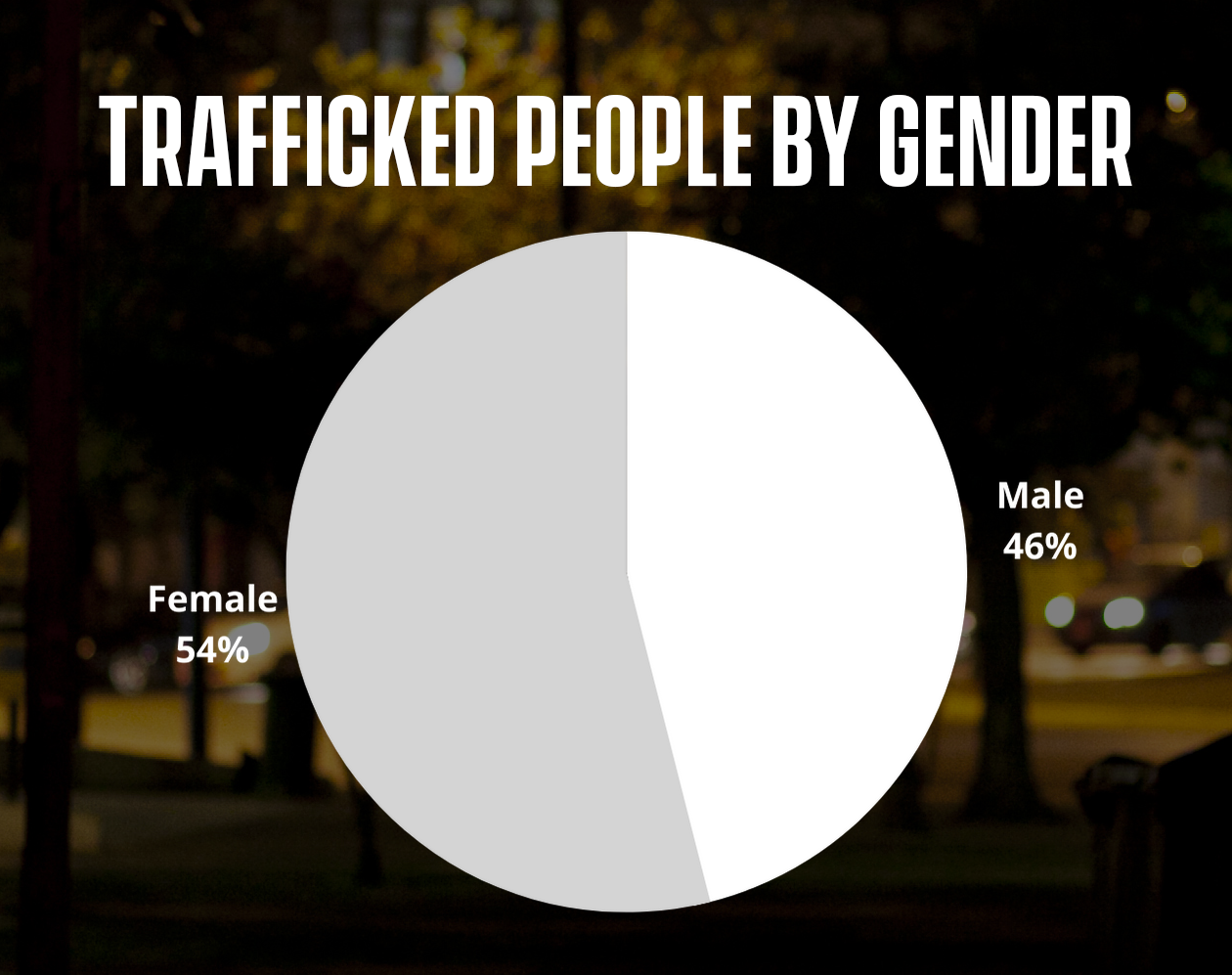
It is true that the majority of human trafficking victims are women (54% according to the International Labour Organization); however, men and boys are widely affected by sex and labor trafficking as well, at much higher rates than people realize.
The human trafficking myth that males are rarely or never affected can be dangerous, leading to fewer preventative and aftercare programs specifically targeted towards those who identify as male.
Human Trafficking Myth 6: Human trafficking only happens in impoverished communities.
While those living in poverty are disproportionately affected by human trafficking, there is no single face that fits survivorhood. People of every race, gender identity, age, and economic situation can be victims of labor and sex trafficking. Vulnerability can stem from a variety of reasons, and poverty is only one such circumstance.
Although low- and lower-middle-income countries have the highest rates of exploitation, trafficking is also a concern for high-income countries. Over half of all forced labor exploitation occurs in either middle- or high-income countries.
Human Trafficking Myth 7: All human trafficking victims are kidnapped and isolated.
This myth about human trafficking is often portrayed in pop culture. But human trafficking doesn’t require the survivor to be taken from their home at all. As long as force, fraud, or coercion is present (or the victim is underage), the victim doesn’t need to be transported.
In instances of cybersex trafficking and online exploitation, for example, a survivor may be forced, coerced, or threatened to livestream or record themselves performing sexual acts from a home computer or cell phone.
In cases of familial trafficking, which constitute as many as 50% of trafficking cases, it’s common for traffickers to pick up their victims from their homes and drive them to and from clients or a job site, only to return them home afterward.

Human Trafficking Myth 8: Human smuggling and human trafficking are the same.
Human smuggling involves illegally moving people across a country’s borders. Human trafficking, on the other hand, is when “traffickers use force, fraud, or coercion to control victims for the purpose of engaging in commercial sex acts or labor services against his/her will.”
In some cases, human trafficking can result from someone smuggling an individual, but not every human smuggling case becomes trafficking.
Smuggling always involves movement, and trafficking does not require any movement at all.
Human Trafficking Myth 9: Victims are usually kidnapped and trafficked by strangers.
Sadly, in over 60% of cases, victims are familiar with their traffickers. A trafficker could be a family friend, a significant other, or a close relative.
Familial trafficking is a horrific and common reality where a victim’s trafficker is either a direct family member or known — and often trusted — by the victim’s family. When the trafficker already has a connection to the victim, it can be easier to coerce the victim into forced sex or labor.
Human Trafficking Myth 10: Escaping trafficking brings immediate relief for survivors.
For survivors, the process of police intervention is often traumatic. Many have a deep, justified fear of law enforcement and have extreme panic and confusion during an operation. Survivors then are asked to give testimony to police regarding their abuse, which can be further traumatizing.
It is not uncommon for victims to try and hide or escape from law enforcement during a rescue operation. Rescue is not the final step to freedom for each survivor, but, rather, it is the beginning of a lifelong process of healing as they address mental health challenges, health problems, and reintegrating into society.
Human Trafficking Myth 11: The best way to fight trafficking is to immediately take people away from trafficking, “rescuing” them.
While it may seem like immediately removing victims from their situation is the best way to help them, that action could be highly dangerous and even classified as kidnapping if the right authorities aren’t involved. It can also remove survivors’ ability to understand what’s happening and erase their autonomy in the process.
Reporting to the right people is the best action to take if you suspect trafficking. When law enforcement is able to recover the survivor and arrest the traffickers involved, a significant and lasting impact is made. With the traffickers facing criminal charges, they are prevented from trafficking more victims, and human trafficking itself becomes a more dangerous crime for criminals.

Human Trafficking Myth 12: All traffickers are evil and intentional participants in the crime.
Human trafficking is a complex issue deeply rooted in many systematic issues, including poverty, normalized behavior, past abuse, and complex power dynamics.
It’s not uncommon for traffickers to participate purely to escape their own victimization. The traffickers may have been trafficked themselves and seized the opportunity to “move up” in a network’s hierarchy and avoid being trafficked further. They may also be so desperate that illegal activity seems like the only option. In those cases, they might not even know that what they’re doing is trafficking.
Human Trafficking Myth 13: There’s nothing I can do about human trafficking.
There are so many ways you can fight human trafficking with what you already have. Here are a few ideas:
- Fight labor trafficking by becoming an informed consumer and getting to know supply chains. To make it easy, you can download an app like Free World or Good On You.
- Take a stand against sex trafficking by educating others on the issue and creating awareness and fundraising.
- Volunteer at a local nonprofit that works in the prevention, intervention, or aftercare of human trafficking.
- Speak up when something doesn’t look or feel right — you might just save someone’s life. Download the SimplyReport app so you can let experts know what you’re seeing.

This article was most recently updated with accurate information and statistics on June 26, 2026.