
AI is being used both by traffickers and by those fighting trafficking. How can we use this complex developing technology for good in a rapidly changing world?
The use of artificial intelligence (AI) has soared since ChatGPT launched in November of 2022, impacting every single industry — including the massive criminal enterprise of human trafficking.
Human trafficking is a crime that generates around $236 billion a year, according to the International Labour Organization. The potential for low investment and high payoff has made it incredibly appealing for traffickers to use AI to further maximize their profits by streamlining recruitment, advertising, and exploitation processes.
At the same time, nonprofit organizations, law enforcement, and other advocates have been right alongside them, developing ways to use AI to combat this insidious industry. However, this is a fight deeply marked by ethical challenges and regulatory gray areas.
This article will explore how AI is currently used to fight human trafficking, and how traffickers use AI to evade authorities and escalate their crimes.
How is AI being used to fight human trafficking?

AI has been used to fight human trafficking almost from the moment of its launch. In particular, AI's ability to aggregate and analyze large amounts of data at once can be an incredible aid to anyone who is investigating trafficking crime on a large scale.
Using AI to identify trafficking victims
AI can be used to identify potential trafficking victims by analyzing online advertisement postings, scraping public social media profiles and posts, and pairing that information with databases of missing persons (especially children).
For example, THORN was part of launching the Spotlight tool, which uses AI to analyze information from the National Center for Missing and Exploited Children to locate kids who are reported missing.
Stop the Traffik partnered with IBM to create the Traffik Analysis hub, a collecting point for open-source data that can trace global patterns and suggest trafficking hotspots to watch.
Love Justice International creates similar heatmaps to inform prevention strategies, identifying places where individuals in transit are at high risk of being trafficked.
Facial recognition software can be used to tie photos on social media to real people who might be exploited. Although this technology is far from perfect, it can be a place to start for investigators who are looking for potential victims.
Machine learning for human trafficking detection
Machine learning is one of the most common kinds of artificial intelligence, describing the process in which programs are fed existing information in order to "learn" and then predict or generate patterns. Machine learning is an umbrella term that houses tools including large language models (LLMs), the type of AI tool that has defined the past couple of years (think ChatGPT, Gemini, and Claude).
Predictive modeling for human trafficking can mean looking at financial records, travel documents, and criminal charges. AI can powerfully cross-reference massive datasets quickly, extrapolating key findings, summarizing them, and sparing thousands of man hours.
AI tools for law enforcement in human trafficking cases
Law enforcement has used rudimentary AI tools for longer than the general public. However, with the AI revolution, their ability to use new tools to work on human trafficking cases has increased dramatically. Here are just a few ways the UN's Inter-agency Coordination Group Against Trafficking in Persons identifies law enforcement using AI to combat trafficking:
-
Image recognition to find trafficking evidence
Law enforcement uses facial recognition to scan footage, photos, and social media, as previously mentioned. This can be used to find both those at risk of victimization and perpetrators. But law enforcement can use other kinds of image recognition too.
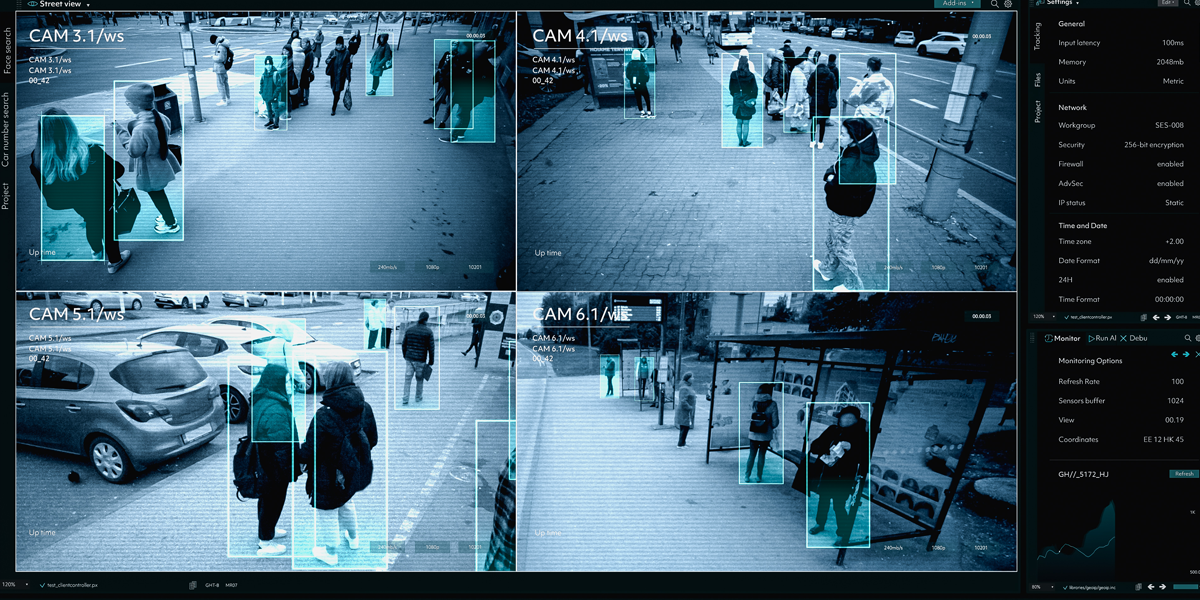
For example, AI can analyze satellite footage to identify potential illegal labor trafficking at sea, in brick kilns, through mining, or on farms. Surveillance footage from public places can also be quickly analyzed in bulk to flag warning signs and timestamps for officers to review.
-
Natural Language Processing (NLP) to detect trafficking ads
Traffickers have been known to use rapidly-changing and evolving code words and phrases to obscure their illegal activity. Sometimes, those words are even just emojis. Because of how quickly networks of traffickers and those they are exploiting adapt, it can be time-consuming and tedious for human investigators to identify emerging patterns.
This is another area where AI can be a great asset. NLP can quickly process text threads, emails, social media posts, call transcripts, and other text information to detect words and phrases that could indicate trafficking. In this usage, AI may easily be able to decode language that is covertly advertising the sale of exploitive services.
-
Multi-lingual analysis for global trafficking networks
Language barriers have always posed a significant challenge to those seeking to combat trafficking — especially international trafficking, which is rarer, but often more complex and difficult even before language factors in. The reality is also that even within a single country's borders, traffickers and victims from multiple countries of origin may be involved. The Exodus Road recently assisted law enforcement on a case involving a network of traffickers from three different countries all working together to traffick individuals from just one of those countries — and three languages were involved in the case.
AI translation has been vital in removing those barriers. Multi-lingual analysis allows large sets of communication to be processed at once, even if multiple languages are used. This can dramatically speed up the process of investigating and help with finding leads in challenging cases.
How social media platforms detect trafficking with AI
Similarly to tools used by law enforcement, social media platforms can use AI to analyse potential words or phrases that might indicate trafficking or expressions of distress.
Unfortunately, this is largely dependent on the platforms themselves to implement, due to encryption and encoding standards. Most platforms do not have much motivation to self-police. Facebook, for example, has been revealed to have a staggering 17-strike policy when it comes to flagged sex trafficking before they will actually remove an account.
However, hypothetically, social media platforms can and should be able to use AI tools to flag potential trafficking danger in the same way they have flagged other harmful content in the past. Their tools to do so have historically been plagued by inaccuracy, but a combination of artificial intelligence and human review could help models learn what is worth flagging and escalating to the next level — and what merits an immediate ban.
Limits and ethical concerns in using AI to combat human trafficking
Clearly, AI can be a powerful tool in combating human trafficking. However, it is still absolutely reliant on human compassion and human common sense to be deployed ethically, especially while we exist in a grey area where legislation and fine tuning of the tools themselves lags behind implementation.
Here are a few ethical concerns in using AI to combat trafficking.
AI bias in human trafficking detection
As previously discussed, any form of machine learning is taking existing information and aggregating it. It is extremely well-documented that as a result, AI is biased in the same ways that most societal tools are biased: towards white, conventionally attractive, gender-binary presenting individuals. These are the kinds of individuals AI is trained on, both visually and linguistically, because they have dominated publicly visible data for so long.
Unfortunately, we know that in fact, it's often those who are part of marginalized people groups — the exact people AI is least likely to accurately identify — who make up the majority of people experiencing trafficking. This means AI is least reliable where it's needed most.
Privacy risks for trafficking victims using AI systems
One of the most critical elements of any trafficking investigation is preserving not just the survivor's physical safety, but their psychological safety as well. This is especially true given that a sense of violated autonomy and safety can be the longest-lasting impact from being trafficked.
AI does not have the ability to accurately assess what information about a survivor should be confidential. Data that is scraped, even from hypothetically "public" sources, might still end up in places where survivors would never choose for it to go. This could greatly compromise their trust.
Transparency and accountability: requirements for responsible AI deployment
Right now, AI is largely the technological wild west. Because legislation moves slowly and tech moves fast, there is very little accountability for AI tools. This means that where it is misused, anyone on the receiving end has little to no recourse. The reality that AI giants are answerable to no one could accidentally enable great abuse of these tools, even by people intending to do good.
Can AI be truly trauma-informed?
Aftercare practitioners have been asking this question about technology in general, but it has become far more urgent with the widespread advent of AI. Without human eyes to read body language, human ears to hear tone, and a human heart to compassionately intuit a survivor's needs, can AI ever truly be trauma-informed?
Empathy cannot be automated. Artificial intelligence may be directly at odds with emotional intelligence, which is by default authentic and humanity-led.
All of this means that AI's role in fighting human trafficking will have to be held in balance with a need for constant human involvement.
How traffickers use AI

Unfortunately, traffickers can use AI in many of the same ways that law enforcement and nonprofit organizations can, to devastating effect.
AI and online human trafficking recruitment
Recruitment into human trafficking schemes has been in a steady shift online for decades now. The Exodus Road has tracked the continued rise of social media as a recruitment tool year over year. AI has sped up the recruitment process, making it easier to post false job promises or hold multiple grooming conversations simultaneously, even in multiple languages.
This becomes increasingly easy as AI personas become increasingly, eerily lifelike. Now traffickers can mimic any kind of employer, romantic partner, or trusted friend, filling out full social media or dating profiles while posting on infinite job boards.
AI used to profile vulnerable individuals for trafficking
Traffickers have long sought out vulnerable individuals to traffick: those who are impoverished, marginalized, struggling with mental or physical health, or otherwise displaying a clear weakness. AI has made it easier than ever before for traffickers to skim through social media and mark profiles of those they can then groom and exploit.

Does AI increase the risk of exploitation?
The short answer is yes, from what initial law enforcement and NGO assessments can tell, AI does increase the risk of exploitation through expanding a trafficker's toolkit and reach.
Because the technology is still so new, we do not have reliable data on exactly what the increase of that risk is. But it does seem undeniable that some level of elevated risk exists, especially for those who spend extensive time online.
How traffickers use generative AI
One way in which trafficking is expanding with AI's help is through generative AI. Unfortunately, using widely-available nudify apps, traffickers are able to produce Child Sexual Abuse Material (CSAM) without even needing to have explicit photos of that child.
This horrifying reality is taken to another level when the world of deepfakes is introduced. If the abuser has enough imagery on hand, very believable sexually explicit videos can be created of literally anyone.
Whether or not these actions constitute trafficking could be debated, but they certainly qualify as image-based abuse. They also lay incredibly easy groundwork for trafficking through sextortion. Even if an explicit image is AI generated, it can still be used to threaten and blackmail an unsuspecting subject into caving into a trafficker's demands — serving as a lever for control and coercion.
Online grooming and AI safety
As previously mentioned, grooming is one of the many predatory behaviors that has become infinitely easier with the advent of AI. This is particularly troubling given how often trafficking begins with a seemingly innocuous romantic relationship, friendship, or benevolent mentorship.
Staying safe in the AI era means familiarizing yourself with signs that you are being catfished or otherwise lured into human trafficking. The good news is that most online safety practices that already apply to staying safe around predatory humans will also apply to personas and bots deployed using AI. This is part of why The Exodus Road created Influenced, a state-of-the-art digital safety curriculum.

A human-first approach: balancing opportunity and risk
The double-edged sword nature of human trafficking and AI means that it's essential to take a human-first approach in using AI to fight trafficking. Like any other technology, AI is just a tool. Every tool can be used constructively or destructively; the difference lies in the intentionality and skill with which a tool is employed.
For example, AI's conclusions about data sets still need to be reviewed by analysts with the investigative skills to truly know what they are looking for. Facial recognition software can be a starting point, but it shouldn't be the end when definitively identifying someone, especially knowing AI's limitations and inherent biases.
Aftercare for trafficking survivors might benefit from AI to sort information or to provide some educational support both to prevent trafficking and re-exploitation. But human social workers should always lead in case management and interacting with survivors. This is especially critical when we consider that a part of survivors' trauma, increasingly, will include traumatic associations with AI and technology. Only real people can repair that kind of wound.
At The Exodus Road, we have always been at the forefront of technological innovation, incorporating it into undercover investigations and prioritizing it in prevention education initiatives. However, that innovation has always been led by real humans. When you support The Exodus Road, you can trust that balance to be upheld.
Support The Exodus Road in combating human trafficking:
Donate Now