Human Trafficking and Online Exploitation in the Western Balkans: The Hidden Corridor
Human trafficking is incredibly common in the Balkans — but it doesn’t take the form you would assume. As exploitation shifts online, it can become dangerously invisible, a hidden corridor to abuse.
Here are six things you should know about human trafficking in the Balkans and what you can do about it.
1. How trafficking happens in the Balkans: Maria's story
Picture a young woman in Cartagena, Colombia— call her Maria (she is a composite of the victims described in Europol’s October 2025 case files).
One Sunday morning, Maria opens her laptop and types “Work in Europe” into the search bar. She is in her early twenties, recently graduated from university, and looking for a way to see the world.
The agencies that pop up offer everything: nannying jobs, paid volunteering with animals, modeling, service work. She fills in several applications. Within days, an email arrives: “Hostess in Vlorë, Albania — interview invitation.”
A smiling Spanish-speaking young woman walks her through the offer. The job involves meeting and greeting guests at a hotel on the seashore, the pay is decent, accommodations are provided, the contract is attached, a ticket paid for.
Maria lands in Tirana, Albania. A shuttle car picks her up along with two other girls of around the same age.
Then everything changes.
Her documents are taken, and she is suddenly informed that she is in debt. From now on, she has to work in an industry far from anything she was promised, and the people running the operation make sure she pays her “debt” by threatening her two younger sisters back in Colombia.
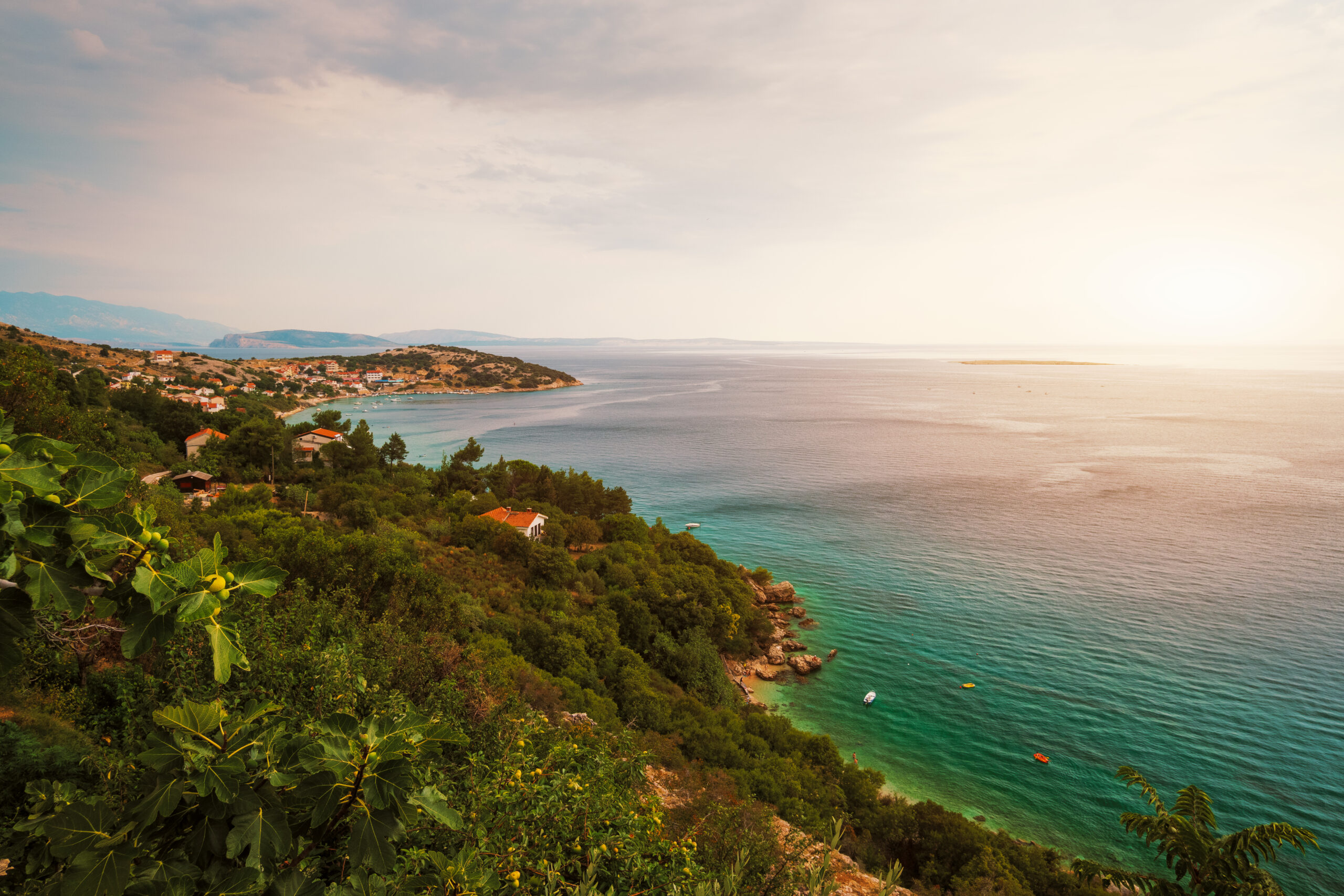
The story sounds like the plot of a bad movie. However, it is the terrible reality happening two steps away from tourists sipping cocktails at beach clubs all along the crystal-clear blue waters of the Adriatic.
In October 2025, a Europol-coordinated operation dismantled a criminal network operating across Albania, Colombia and Croatia: 17 arrests, 54 survivors identified.
The pattern is deceptively simple: human trafficking that looks like legitimate job recruitment. There are no black vans and no dirty basements, none of the horrors we are used to seeing in the news. There are two-week rented apartments, young women who look like tourists, and not enough time for neighbors to notice anything suspicious or for police to start building a case.
2. Where is The Balkan Corridor?
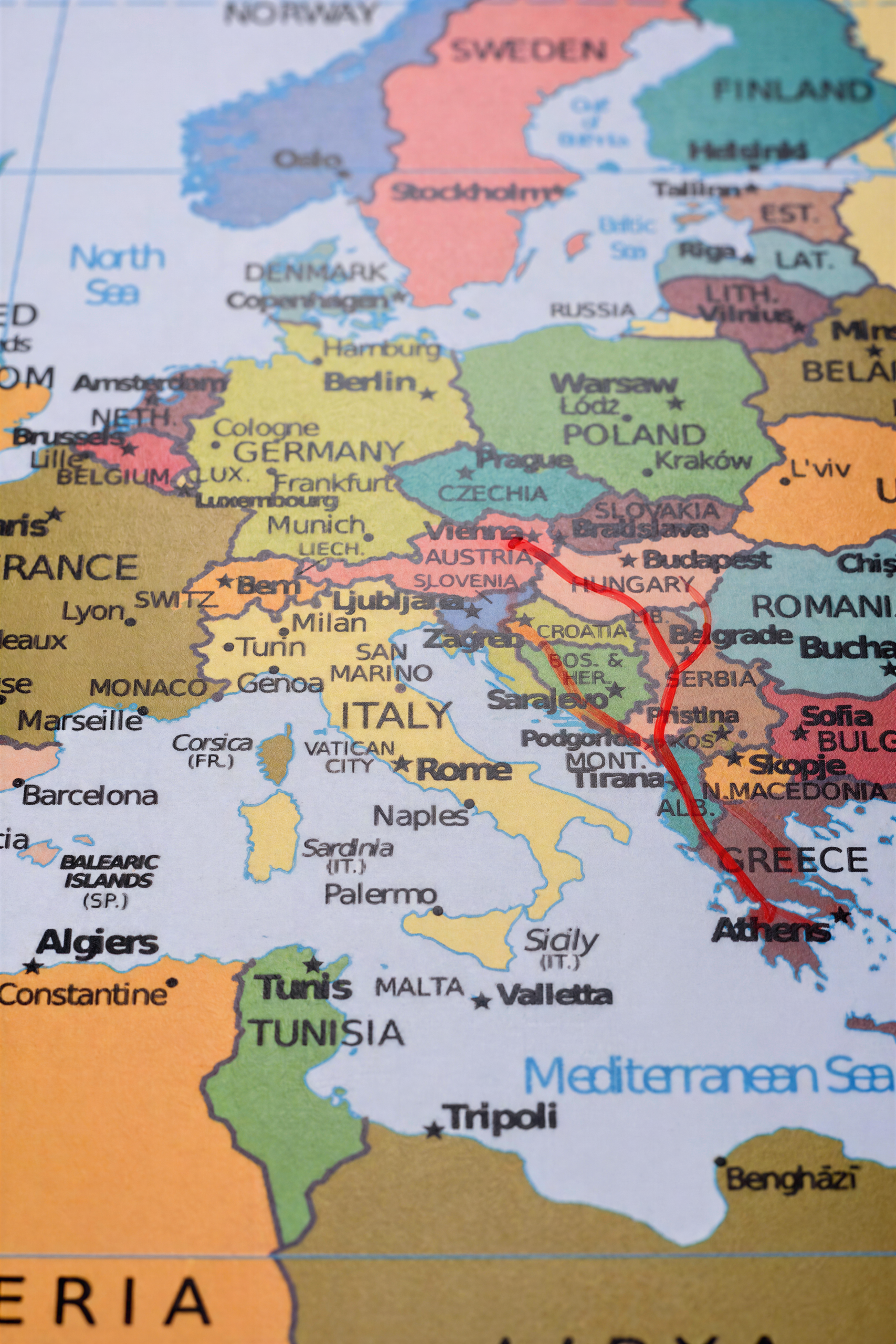
Let’s look at the map: technically, Croatia and Slovenia are not Western Balkans. They are former Yugoslav countries that joined the EU (Slovenia in 2004, Croatia in 2013). Geographically, they are the door to Europe.
By “Western Balkans,” officials usually mean the six countries that are not yet in the EU: Albania, Bosnia and Herzegovina, Kosovo, Montenegro, North Macedonia and Serbia — known together as the WB6. All six are, in different combinations, source, transit and destination countries for human trafficking, sitting on the long migratory and smuggling route that runs from Greece and Turkey up towards Central Europe.
The region is a hallway. Croatia and Slovenia are the doors at the end of it. People, money and trafficking flows move down the hallway, toward the doors, making a complex system that involves all kinds of criminal activities.
How the wars of the 90s built today’s trafficking networks
To understand the present, we need to look at the past.
Trafficking in the region has close links to the wars of the 1990s. Any war produces what every trafficker needs: orphans, displaced communities, smuggling routes, and failed states unable to maintain any social order.
When the worst days of war were over, an international presence moved in and brought a new plot twist of its own: demand for sex trafficking, as shown in the film The Whistleblower. The echo of these years keeps hunting the region.
The human trafficking of the 1990s was close to what we remember from the movies: women brought from Eastern Europe, underground brothels and clubs, confiscated passports, physical violence.
Over the last decades, the trail has thinned, but the network never disappeared. It just moved the address from physical to URL.
The human trafficking network in the Balkans never disappeared. It just moved the address from physical to URL.
Trafficking in the Balkans moved online
The process became clean, easy and efficient for the criminal groups. Where does the money come from? Increasingly, from professional-looking websites built by nontraditional criminals who have never seen a gun in their lives.
The gangs operate in modules. Separate “departments” take care of different parts of the process: recruiters (often victims themselves), people responsible for transportation and accommodation (the “travel agents”), and the management. They offer “independent” escorts on platforms you can find without any dark-web skills; the listings are open and easy to find.
There is, of course, nothing “independent” about them. Each person is under the control of the hierarchy of traffickers; behind every profile, there is a chain of controlling entities that ensures none of the trapped are making their way out. Women from Latin America to Asia are rotated between cheap apartments, moved across borders, and the payments flow through cash and crypto wallets registered in remote locations.
Human trafficking has different faces in that cycle:
- Local girls
- Recruited at home, sometimes through a “boyfriend,” and either moved across the border or lured by an attractive job offer.
- Children
- Across the region, Roma children are heavily represented among victims — in forced begging, drug trafficking and child marriage. They are kept out of school and forced to work from as young as four or five. They reach their teenage years with no education, no options, and in most cases, no institutions or organizations to turn to.
Their exploitation happens mostly offline: on streets, in markets, or in arranged marriages. But according to the 2025 TIP Report on Romania, the networks behind it use social media and video-chat platforms to recruit children, running the full range of financial crimes alongside the trafficking itself. - Workers
- The 2025 TIP Report lists foreign workers from the Balkans, the Philippines, India, Bangladesh and elsewhere as vulnerable to trafficking in Slovenia, in construction, agriculture and hospitality.
- Foreign women
- This is the newest vulnerable group. Colombian women dominate the online profiles in Albania and Kosovo; Brazilians in Bosnia and North Macedonia; Russians and Moldovans in Montenegro and Serbia.
For the networks, foreignness is a feature: a woman who doesn’t speak the language, doesn’t know the system, and fears the police is easier to control and threaten.
Online exploitation is outpacing the institutions. The criminal world has no bureaucracy and cannot be slowed down by slow procurement and long budget cycles.
3. Online exploitation is outpacing the law: The Public Room case
Let’s take a closer look at one case.
In January 2020, a group of journalists in North Macedonia discovered an online group on Telegram called “Public Room.” It had more than 7,400 members. They were sharing photos of women and girls along with their names, phone numbers, and social media profiles — none of them with consent.
Public Room was never, strictly speaking, a trafficking case, as no one was sold or coerced. And yet every researcher who studies online exploitation in the Western Balkans returns to it because it clearly shows the structural errors that allow this to happen.
A Telegram group can be assembled in minutes, and unknowing victims can be cataloged by name and phone number. Police can be persuaded that nothing in their job description applies. Police have no set of tools and expertise to open up these types of cases. And the only thing that breaks the silence is when one woman decides she is willing to be more visible than her abusers.
In this case, the woman was Ana Koleva. She is 28, from Kavadarci, a small town in the south of North Macedonia. After her photo and phone number ended up in the group, she was bombarded with messages and calls from strangers at every hour of the day. She went to the police, but as she was not underage, there was nothing urgent about the case. So on January 27, 2021, she posted an Instagram video describing what was happening to her. The video reached nearly 400,000 views and went viral.
The next day, after Prime Minister Zoran Zaev threatened to ban Telegram in the country, the group was shut down. Hundreds of women marched through Skopje on February 3, 2021 under a banner that became the slogan of the regional movement:
“Failure to act makes you complicit.”
In April 2021, prosecutors finally charged the group’s creator and one of its administrators with producing and distributing child sexual abuse material.
Low statistics often mean low attention. Ana was the first woman to stand up and demand justice, but the Telegram group held the phone numbers and photos of hundreds of other women. For every survivor filing a report, there are dozens who remain silent because they have correctly calculated that the backlash will take from them more than it gives back.
The shift this requires is not in the law or in an NGO program. It is in the mind of every member of society.
4. Restoration is a long road: trafficking aftercare
Imagine Maria, our representative survivor from earlier in the article, returns home to Colombia. She is now likely dealing with immense physical and mental health effects from exploitation. Those effects harm her ability to solve her initial problem: she needs a job and financial stability. She has lost time to exploitation, and perhaps even had her education interrupted. This financial stress makes it hard to find housing as well.
How hard must it be to heal in that situation?
Being freed from exploitation is the midpoint of a survivor’s story, not the end of it. A lack of appropriate care can lead to re-trafficking. This is why The Exodus Road operates with holistic aftercare direct services and partnerships in the countries in which they have hub offices.
Many survivors get stuck in legal limbo with expired or lost documents, slow processes, no money, and little help. Across the Balkans region, Albania has built the most structured system: several shelters run by the government and by NGOs provide housing, medical care, and psychological support. Even there, long-term care remains under-resourced.
The issues are the same in almost every country: long and complicated legal procedures involving the consulates of other countries; NGOs operating on limited donations; a shortage of professional translators and no structured system across the Balkans; and services originally designed for adult women with only a small portion adapted to children and teenagers, who require a different setup and different kinds of help (legally and otherwise).

5. What can you do today about trafficking in the Balkans?
-
01
Support the slow work – NGOs in the region are always looking for help, donations, support of translators, legal professionals and volunteers.
-
02
Report online harassment when you see it, whether that is reporting abusive content or leaked images. Any signs of online criminal activities are important, as the majority of communication today goes online.
If you are online too, you can be part of the solution.