That’s not a love story: the fight for German teenagers
Online exploitation and grooming has become one of the primary ways that teenagers are trafficked in Germany. Their exploitation often begins in what seems like a romantic relationship, which quickly develops into something much darker.
Here’s how human trafficking through online exploitation is happening to German teenagers today.
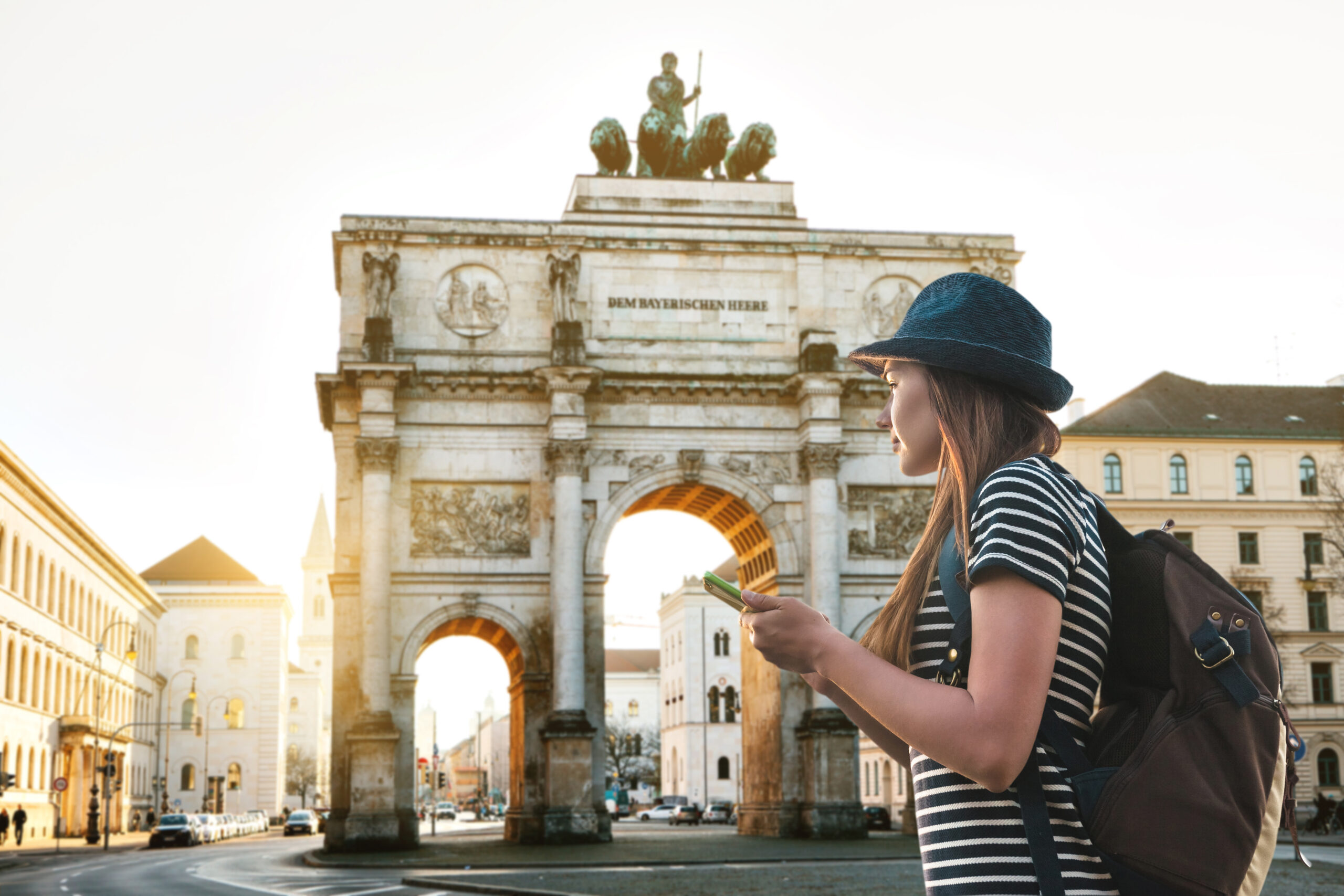
Teenage romance that becomes trafficking
I was once a teenager myself, and I can assure you: love stories are a big part of the life of any teenage girl.
You read stories online and in the young-adult section of the bookstore. You share these stories with your girlfriends and discuss whether the boy from your class is going to finally ask you out.
This was likely similar to how Sandra was living when, at sixteen, she met a nice guy online and fell in love.
Growing up in a small town in Lower Bavaria, clean and cozy, she’d never heard of prostitution or trafficking. It was simply not discussed. However, she was a lonely teenager: Sandra’s mom had a mental illness, so chat rooms gave her a safe escape.
The majority of such stories start with an online contact, which is almost impossible for a parent to trace. Sandra started texting with a guy, and soon it turned out to seem like a real relationship a teenager could only dream of. He was older, protective, and loving, real and exciting.
Years later, when Sandra started her activist work, she said she had felt loved and cared about for the first time in her life.
They had been together for months when he told her he had debts, that he needed her help, and that he knew how to earn some quick money. By the age of 17, Sandra ended up trafficked in a brothel. She couldn’t get out for six long years — years she described in her interview with Der Spiegel with a single word: seelenmord. Soul murder.
Today, Sandra Norak is one of the most prominent activists in Germany fighting forced prostitution and human trafficking, and for the rights of survivors. What happened to her has a name in Germany: the Loverboy-Methode. In a nutshell: a pimp arrives looking like a first love. In Sandra’s case, the trap took months to close — and some careful social engineering.
But sometimes, the trap takes just six hours.

One in four German kids have been approached online with sexual intent
In 2025, according to the media authority of North Rhine-Westphalia, which surveys about two thousand German children and teenagers every year, 24% of eight to seventeen year olds said an adult had already approached them online with sexual intent.
Let’s pause to let that sink in: every fourth child. Among children under fourteen, it was 16%. This number has been stable for several years in a row, which indicates that it’s not a one-year spike.
In 2024, German police registered 16,354 cases of child sexual abuse and 1,191 cases involving teenagers. Here is where it gets international and harder to fight: because most major platforms are U.S.-based, reports of suspected abuse material flow through the National Center for Missing and Exploited Children, which in 2024 forwarded 205,728 tips to the BKA (Bundeskriminalamt, Federal Criminal Police Office) — hundreds every day.
What do these numbers tell us in reality, and what’s the real profile of sextortion and online trafficking in Germany?
The anatomy of financial sextortion
The story of Sandra Norak proves that any teenager can fall into a trap. These traps are engineered by people who know how to target the vulnerable, motivated by income for their business. Sometimes, exploitation is not traditional trafficking. Sometimes it takes the form of sextortion.
One of the most high-profile cases happened in 2022 in Michigan, in the U.S., where a seventeen-year-old football and basketball player named Jordan DeMay flirted with, seemingly, a girl online. She sent some photos and asked for photos back. Then “the girl” asked for $1,000, and the teenager realized he couldn’t scrape together more than $300. Six hours later, Jordan took his own life.
The “girl” turned out to be two brothers in Nigeria. What’s significant about this case is that Nigeria extradited them, and they were sentenced to 17.5 years in prison. Jordan’s mom Jennifer has spent the years since trying to bring attention to the case and help protect other teenagers and their parents.
Turning back to Germany, the pattern is the same. The BKA’s latest situation report lists sextortion as one of the core phenomena in online crime against minors. Why is that happening? The loverboy wants years of your life and money, the groomer wants images to sell, the financial sextortionist wants money as fast as possible. Manipulation, pressure, and speed are the main weapons of this war.
It’s important to understand that the police fight individuals who are involved in CSAM, but the biggest fight is the one against a multi-billion-dollar industry that profits every day from trafficking. These are not some crazy people in basements collecting child sexual abuse material; these are cold-blooded professionals owning a sector of the black economy, ruthless to their enemies.
There are lone predators too, more rarely. But there are also industries, and industries have addresses.
The loverboy wants years of your life and money, the groomer wants images to sell, the financial sextortionist wants money as fast as possible.
Sextortion is happening from Nigeria
That’s the first address. In 2024, Meta announced the removal of 63,000 Instagram accounts in Nigeria running sextortion scams.
The Yahoo Boys
The Yahoo Boys group was not one syndicate but a whole scene with its own training academies, the so-called “Hustle Kingdoms,” where kids as young as 12 are trained in online fraud.
Sextortion is happening from Southeast Asia
The most notorious place is KK Park, a compound on Myanmar’s border with Thailand where workers who are victims themselves run an industrial-scale scam factory: romance fraud, fake investments, blackmail. The person doing the sextortion of a German teenager can easily be a victim doing it under threat of torture and death from armed criminals.

There are many addresses all over the world where sextortion originates. What unites them is the supply chain: the poverty that fills the training academies in Benin City is the same poverty that fills the locked dormitories in Myawaddy. This dark industry’s main fuel is trafficking vulnerable people.
The fight against online trafficking and sextortion in Germany and beyond
As you can see, the fight has to be international, coordinated, and across borders. Fighting the lone predators is part of it, but prosecuting the syndicates and the high-level bosses behind the scenes is of utmost importance. The case of Europol’s Operation MOZAIK, which identified 39 online child sexual abuse suspects across the Western Balkans in a single coordinated sweep, and the consolidated effort of putting behind bars the criminals guilty in the case of Jordan DeMay, show that it can work.
Providing prosecution for the heads of the syndicates is essential. The bosses of the scam economy have learned the actual rule of impunity: it is not about hiding from the law, but about choosing victims whose governments won’t come for you. In 2025, for the first time, some of them chose wrong. A Chinese court harshly penalized eleven members of the Ming family — one of the clans behind Myanmar’s compounds. The U.S. indicted the chairman of Cambodia’s Prince Group and seized over $15 billion in bitcoin, the largest crypto seizure in history. Thailand extradited a kingpin to Beijing.
And yet, the colonel who operates KK Park remains free: sanctioned but untouched, allied with the same junta that demolished his buildings for the cameras.
What does that mean for us? It means that online scams and sextortion won’t be fully eliminated any time soon.
The BKA in Germany carries the fight every day — among other things, it goes after the operators of darknet platforms where child sexual abuse material is bought and exchanged. The E.U. regulation that let platforms voluntarily scan for known abuse material expired on April 3, 2026, deadlocked in Brussels over the “chat control” privacy dispute. The BKA has warned it expects a drastic decline in the reports that generated hundreds of daily leads. That is the same pipeline mentioned earlier. Losing it will slow down the investigation process.
Parents have to fight sextortion and online trafficking too

In Berlin, Bärbel Kannemann retired after almost forty years in the criminal police and decided to take the initiative with some former colleagues and create an association, No Loverboys e.V. They have supported around 2,500 girls in cases similar to Sandra’s.
Theirs is a great example of civil courage and action. The support should start from trust — trusted school advisors, reliable adults ready to help — because this topic always goes back to trust. Loverboys, predators, and online scammers count on the fear and disorientation of kids and teenagers who need someone to trust.
Every piece of prevention advice starts with the same thing: make sure teenagers are aware, that they know how to identify the scam, and that they shouldn’t be scared to tell adults. Punishment and taking away their phone is rarely the solution. In fact, fear of their phone being taken away may push a teenager to keep the secret.
The federal Sexual Abuse Help Line in Germany (0800 22 55 530) counsels worried parents anonymously. Children have their own line, the Nummer gegen Kummer (116 111).
I started this article with a teenage love story because that is where the fight actually begins: not in Brussels, not in a raided compound, but in the moment a sixteen-year-old decides whom to trust.
It can happen in a busy United States metropolis like New York or in a small German town like Bayern. Globalization of crime universalizes the dangers for teenagers across the globe.
The huge trafficking industry on the other side of the screen has training academies, crypto wallets, and armed guards. The anti-trafficking side has one advantage over criminals: we can be the adults a teenager truly isn’t afraid to talk to. We all can be involved citizens looking after our kids, nephews, neighbors, and friends.